
In 'Quezon City Biennial: Ilalim/Ibabaw,' the City Is the Gallery

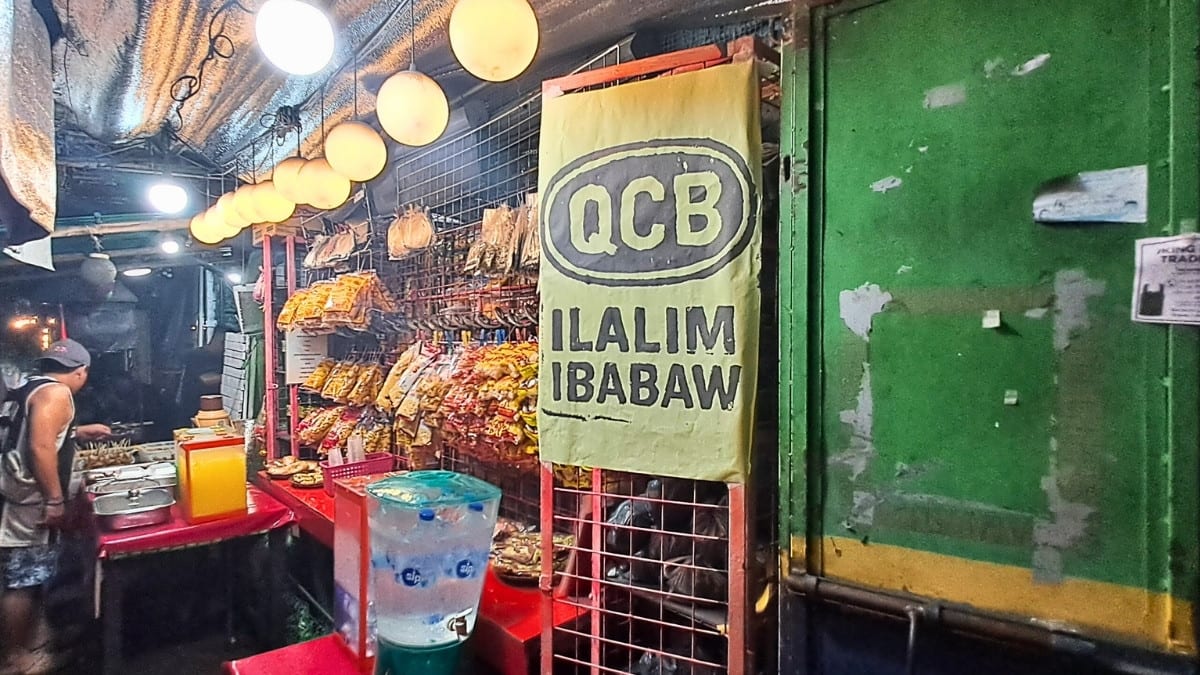
If you’ve ever ridden a Cubao-bound bus before the EDSA Carousel rewired the commute, you’ll remember the ritual question: Ibabaw o ilalim? It wasn’t just about which stop you’d get off—it was commuter shorthand, a local code. Ibabaw kept you on EDSA, condemned to the slow crawl of traffic. Ilalim dropped you into the underpass, a gamble for speed that sometimes paid off. Outside Quezon City, the words don’t mean much. But here, they’re part of the unspoken language you only acquire by riding the routes.
That same sense carries over to the Quezon City Biennial: Ilalim/Ibabaw. To visit it is to map more than 20 venues scattered across the city—five of them “anchor spaces” that mark distinct districts. Some are artists’ homes, skate parks, niche shops, and working studios. You can chart your own course or hop on a jeepney tour, scheduled throughout the biennale’s two-month run, tracing a patchwork of artist-run initiatives stitched into QC’s streets.
ALSO READ:
Do You Still Remember the Old Cubao?
How a President's Dream of the Perfect City Became Quezon City
What ties these DIY spaces together is their foundation: artists who, after building their own practices, now give back by creating room for others. It’s less about market demands than about reciprocity and community care. Victoria Keet, who works closely with head curator Yee Chung Kee, describes the atmosphere with blunt accuracy: “Like a tambayan more than a gallery. It’s more casual and informal than other galleries.”
“What I like about QCB is that each space has its own personality, its own things to bring to the table,” says Yee, a graffiti writer from QC and the architect of the biennale. “That makes it a more holistic kind of gathering—not just something focused on one type of crowd.”
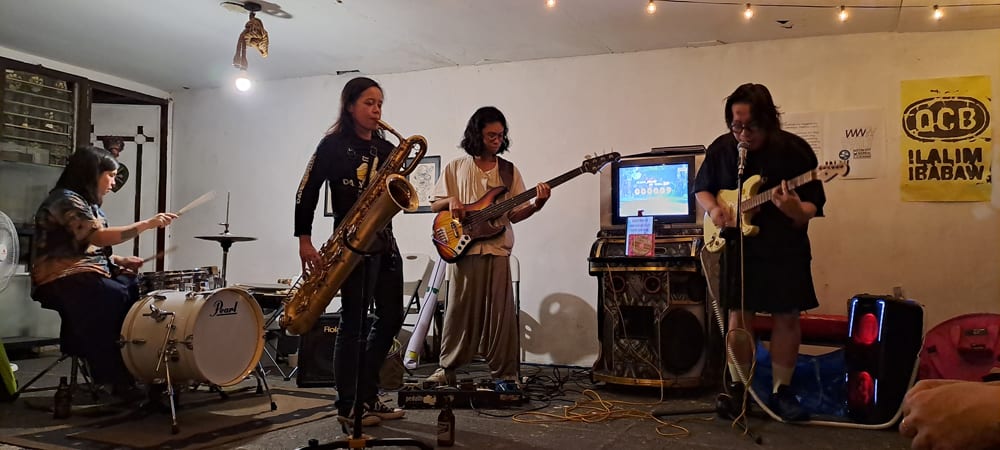
wwwRadio performance at Sampaguita Projects
Why a Biennale, and Why Now?
The idea of tying these spaces together into one event came from Yee Chung Kee, who had been watching the artist-run scene grow and overlap. “Just from seeing what all these spaces have been doing the past few years—not just the artists, but the communities around them, looking out for each other—it made sense,” he says. “We just had to scale it up, package it into one big thing, and see where it goes.”
Even the word biennale comes with baggage. Venice—the mother of them all—didn’t even call itself that at the start. In 1895, it was simply the International Art Exhibition of the City of Venice. The “biennale” tag came later, grafted on like an afterthought. QCB wears it differently. Less homage, more a pact: a promise that this thing will return. It also riffs off another QC homegrown scene, the Kamias Triennial, which leaned on the domestic and everyday, a pointed contrast to the spectacle the word usually drags behind it.
DIY spaces are having a moment here in QC. “Napansin namin yung momentum,” says Gene Paul Martin of Sampaguita Projects, one of the anchor spaces. “Tinawag namin siyang biennale para mapush din kami na sundan pa. Hindi ko siya nakikita na may bigat. Yung biennale na word pwede mong gamitin sa kahit anong context.”
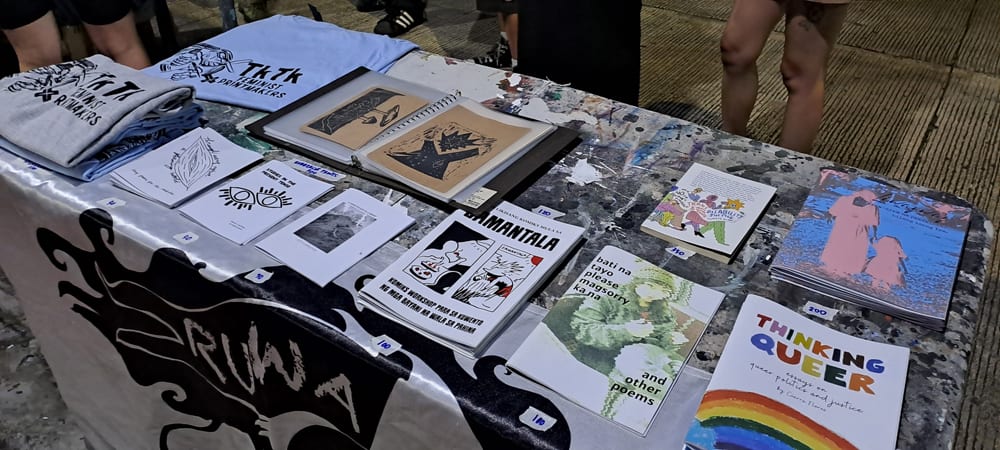
Zines on deck at Sampaguita Projects’ flea market
Selling as Sustainability
Refreshingly—or perhaps because of the event’s youthful vibe—there were no major sponsors backing QCB. Even though the biennale survives on selling exhibitions, the casual atmosphere reigns, which says a lot about the DIY nature of the participating spaces. Depending on which space you visit, you get a sense of its community and the underpinnings of a participating artist’s motivation. Allowing the public to see works that wouldn’t typically appear in a gallery—such as the graffiti and tagged pieces at Ninuno Gallery or a karaoke for guests to enjoy as the opening reception did at Sampaguita Projects.
Sales provided a practical way to keep the event afloat while still favoring the artists in terms of pricing. “[The Quezon City Biennal] is a chance for artists to step away from the usual system. From my perspective, we (artists) deserve to feel that there are platforms that serve artists,” said Martin. This reflects how most artist-run spaces in Quezon City position themselves: as champions of artistic experimentation rather than profit-driven enterprises. Commercial galleries deal in 50–50 split—or in some cases, with terms tilted even more toward the gallery—most artist-run spaces give a larger share to the artist. Events like this offer a chance to reshape the perspective on how to sell one’s art.
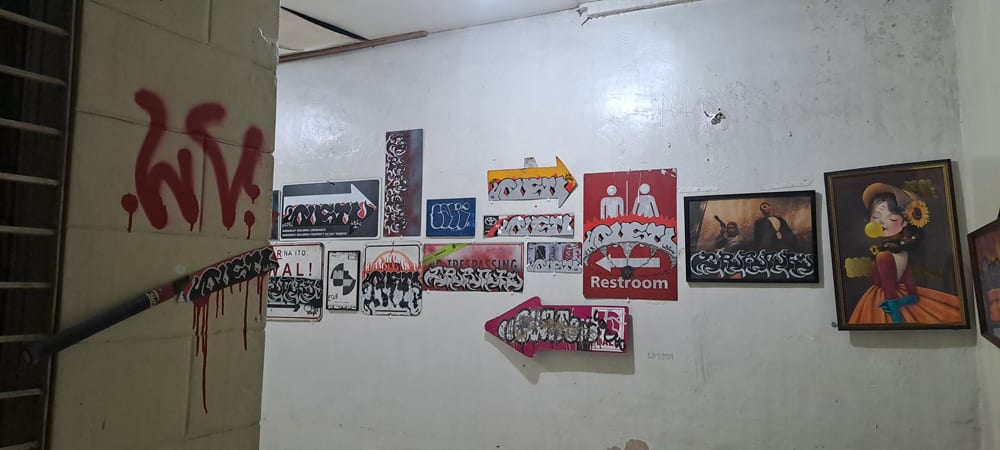
At Ninuno, graffiti road signs make the leap from street corner to gallery wall without losing their bite.
Tambayan Vibe
Each space reimagines what the white cube might look like when stripped of its polish and reset in a local register. Sustainability, in this context, is less about the pressures of a sales desk than about finding ways to keep doors—often literal front doors—open to artists and neighbors alike. Here, credentials matter less than ideas, and the format of “exhibition” stretches to accommodate what art can be, at least within Quezon City. Kalawakan Space Time sits inside a nondescript office building; NO Gallery hides behind Terra Café.
Sampaguita Projects and The O Home are exactly what their names suggest—houses that occasionally shift into communal galleries. They don’t fit the commercial gallery mold. Yes, works are still for sale, but the atmosphere leans toward the casual: a tambayan where conversation is as much a part of the encounter as the art on the wall.
With the momentum of the biennale, new visitors have been drifting into these spaces. “Kasi bawat space may kanya-kanyang crowd yan na hindi naman usually pumupunta sa [ibang spaces],” Martin notes. Each site has its own audience, and for once, those circles are beginning to overlap.
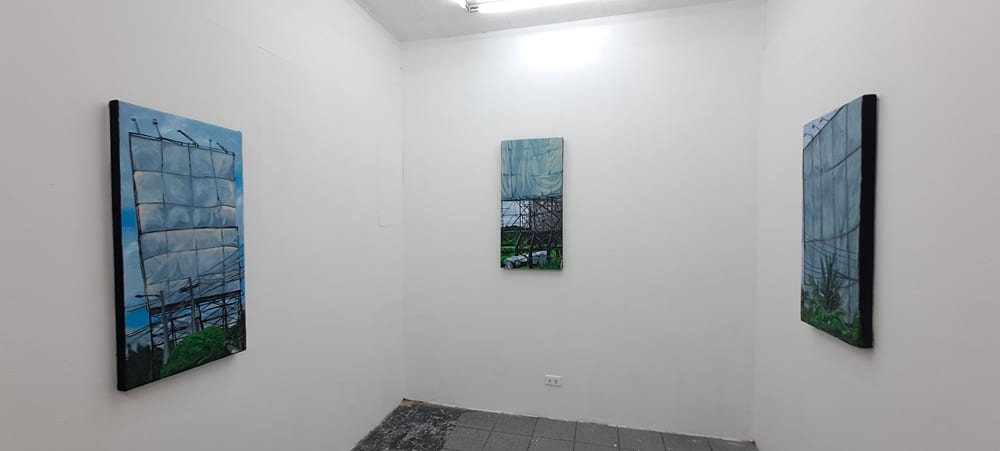
Mark Sanchez’s 'Landscapes (the view from A Bus)', a solo exhibition at NO Gallery, offers the perspective of a bus commuter—a fitting take on Quezon City Biennal’s bus-specific Ilalim / Ibabaw theme.
This seems fitting, given the questions posed by the first biennale. Ilalim/Ibabaw could be the first of many, and in two years, much can change. “It could be interpreted in many different ways. I like to keep it open-ended,” Yee says. The biennale arrives at a moment when commercial galleries, with their rigid demands and uneven profit-sharing, remain the dominant model. Against that backdrop, QCB offers a different rhythm—more provisional, and open to redefinition.
The Quezon City Biennial will run until October 10, 2025, in multiple venues within Quezon City. A full list of venues and pocket venues can be found on their website. Taking their jeepney tours offers an in-depth understanding of these artist spaces. You’ll need to sign up to secure a slot.
