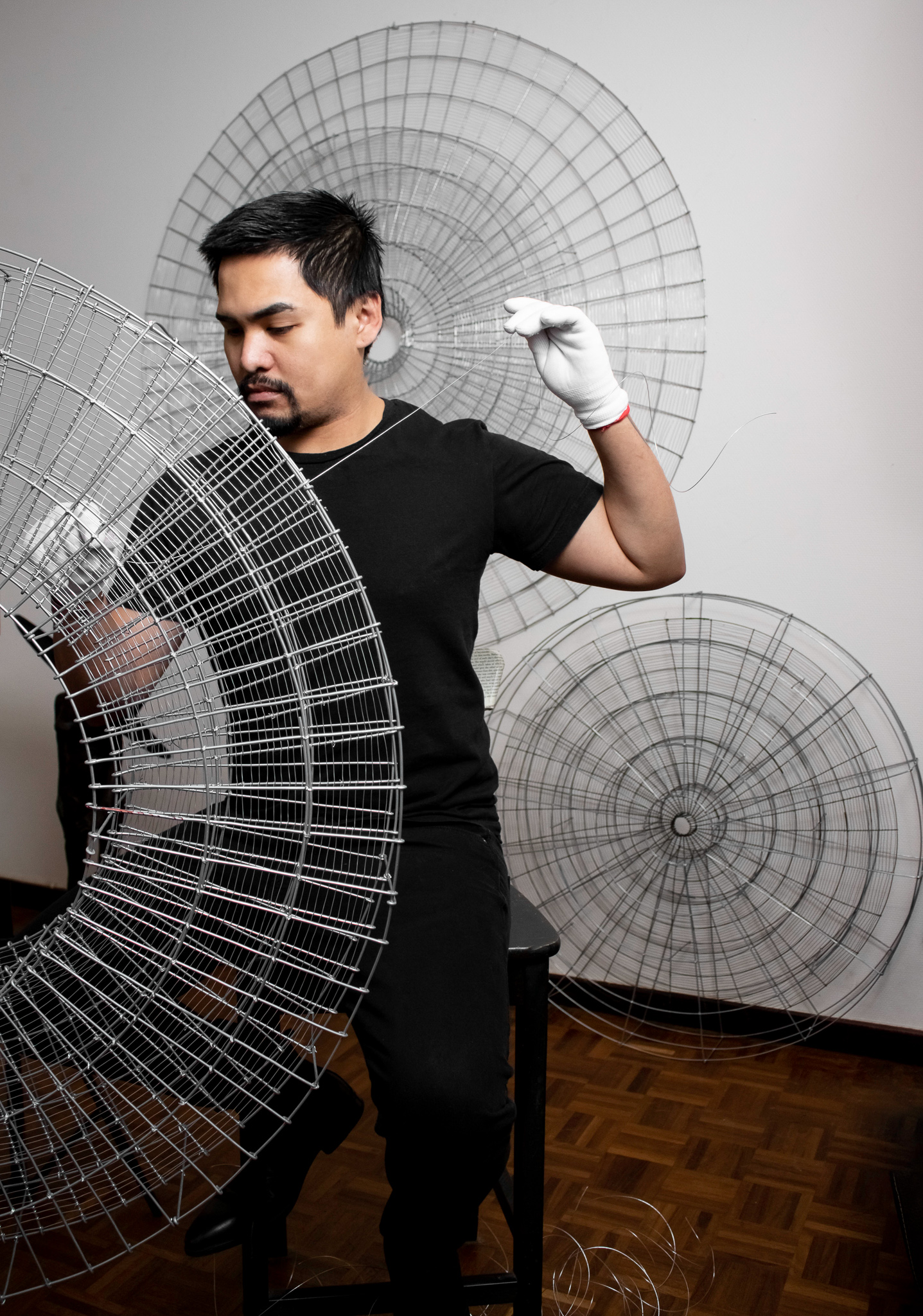
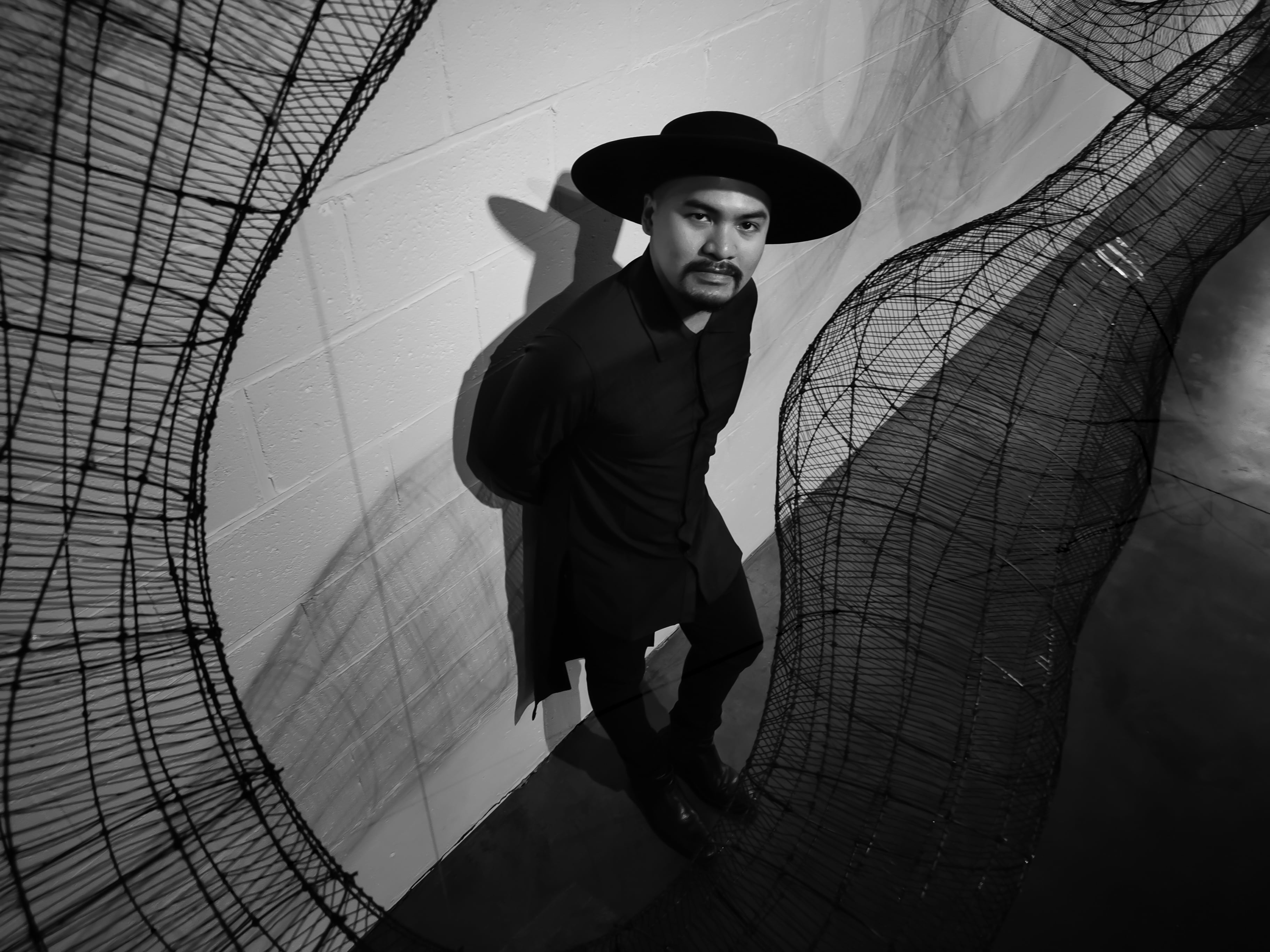
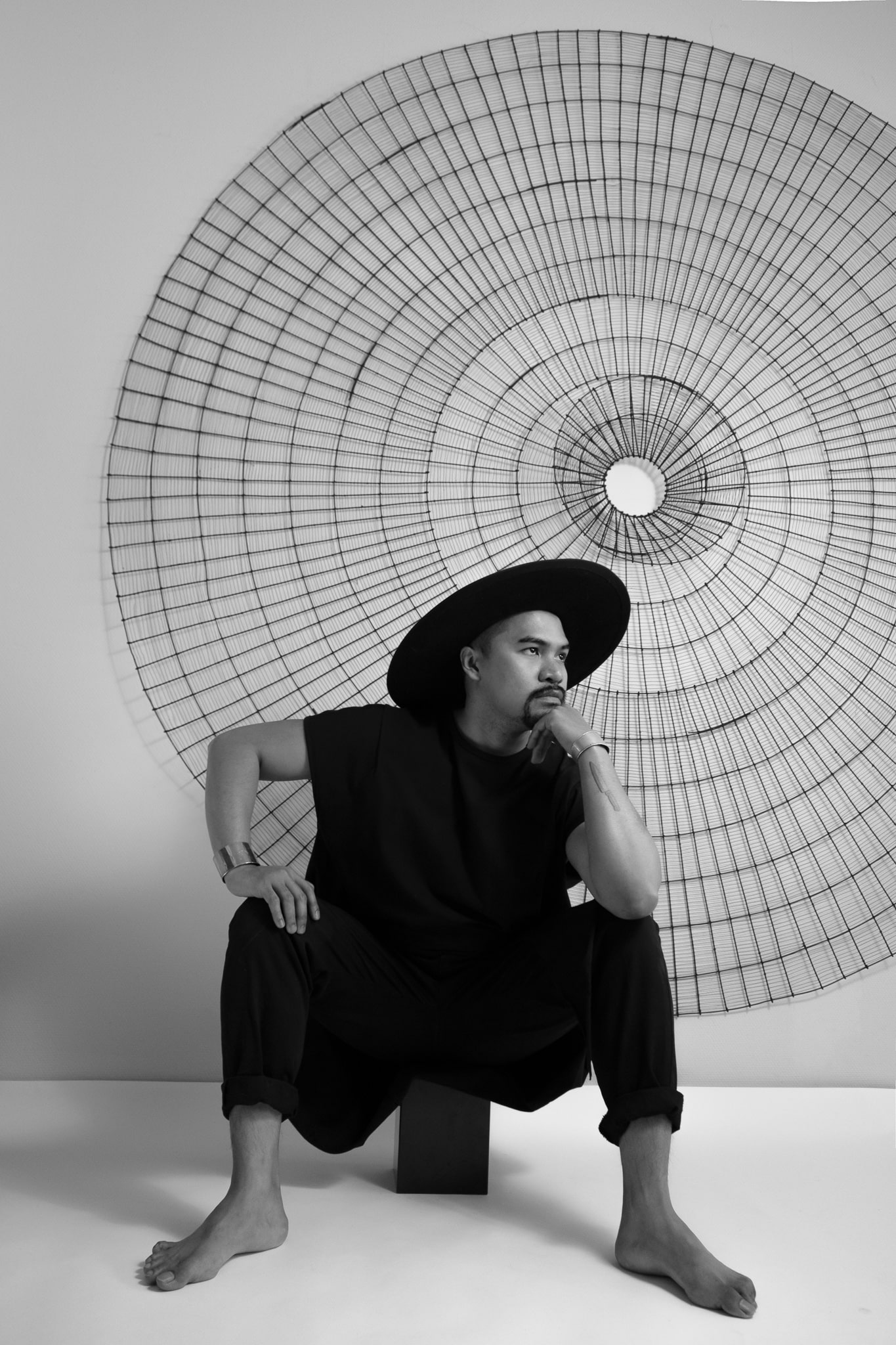
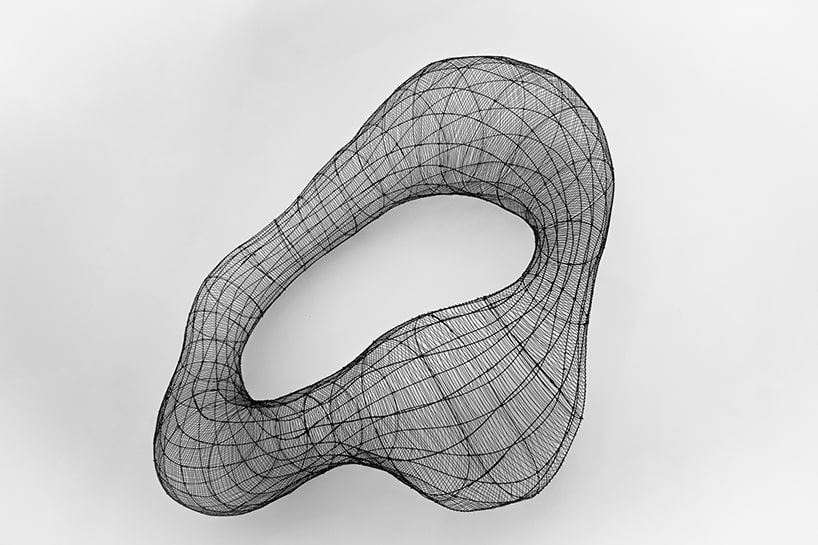
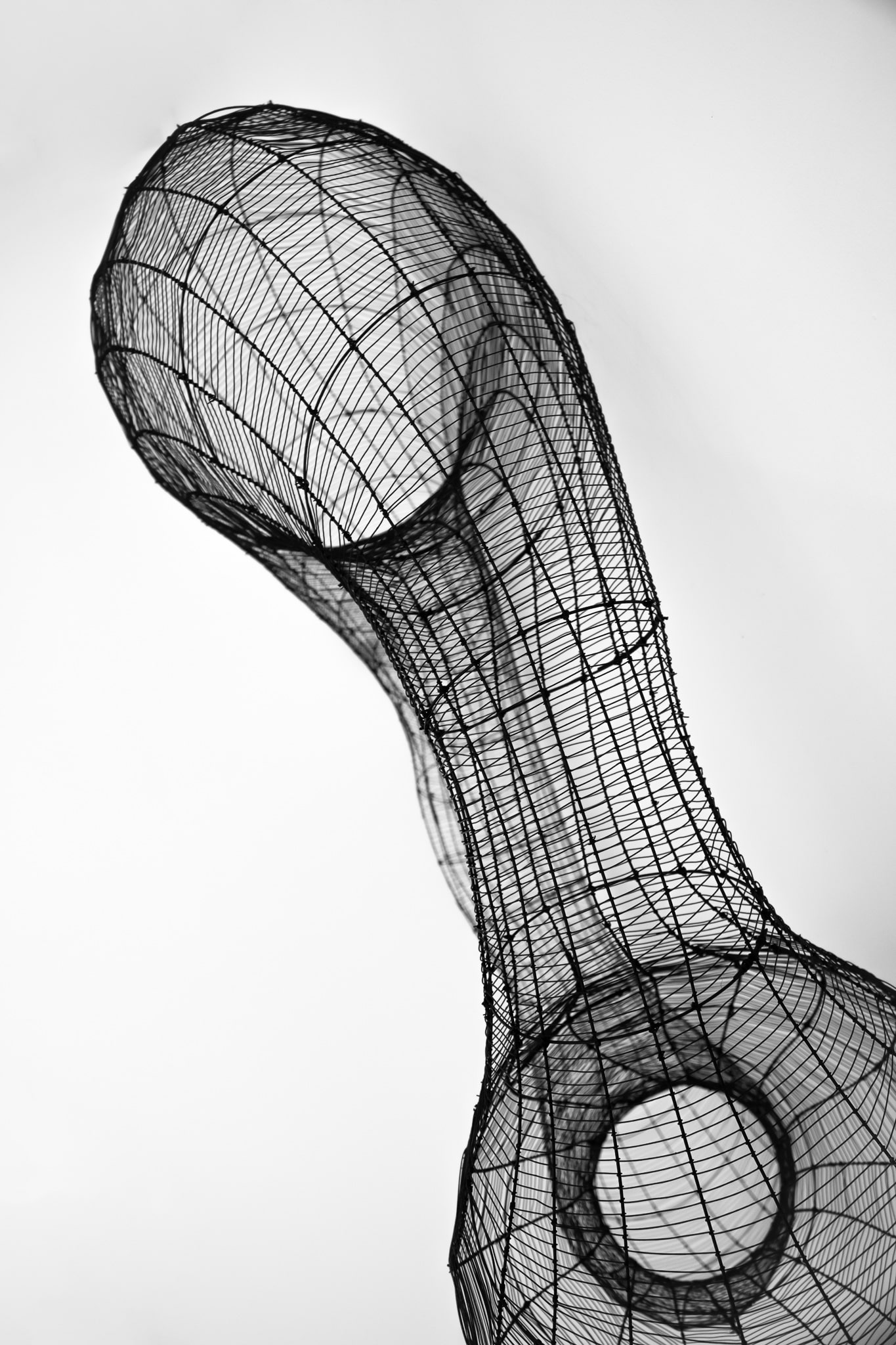
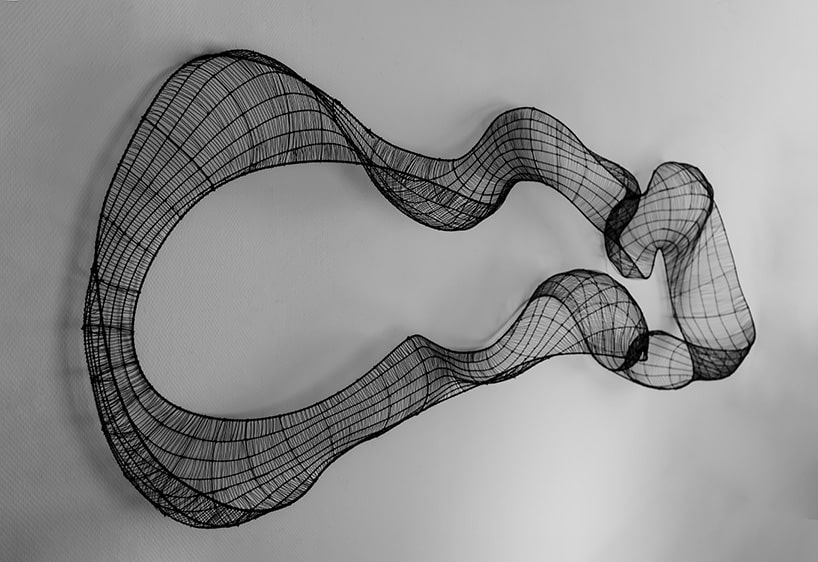
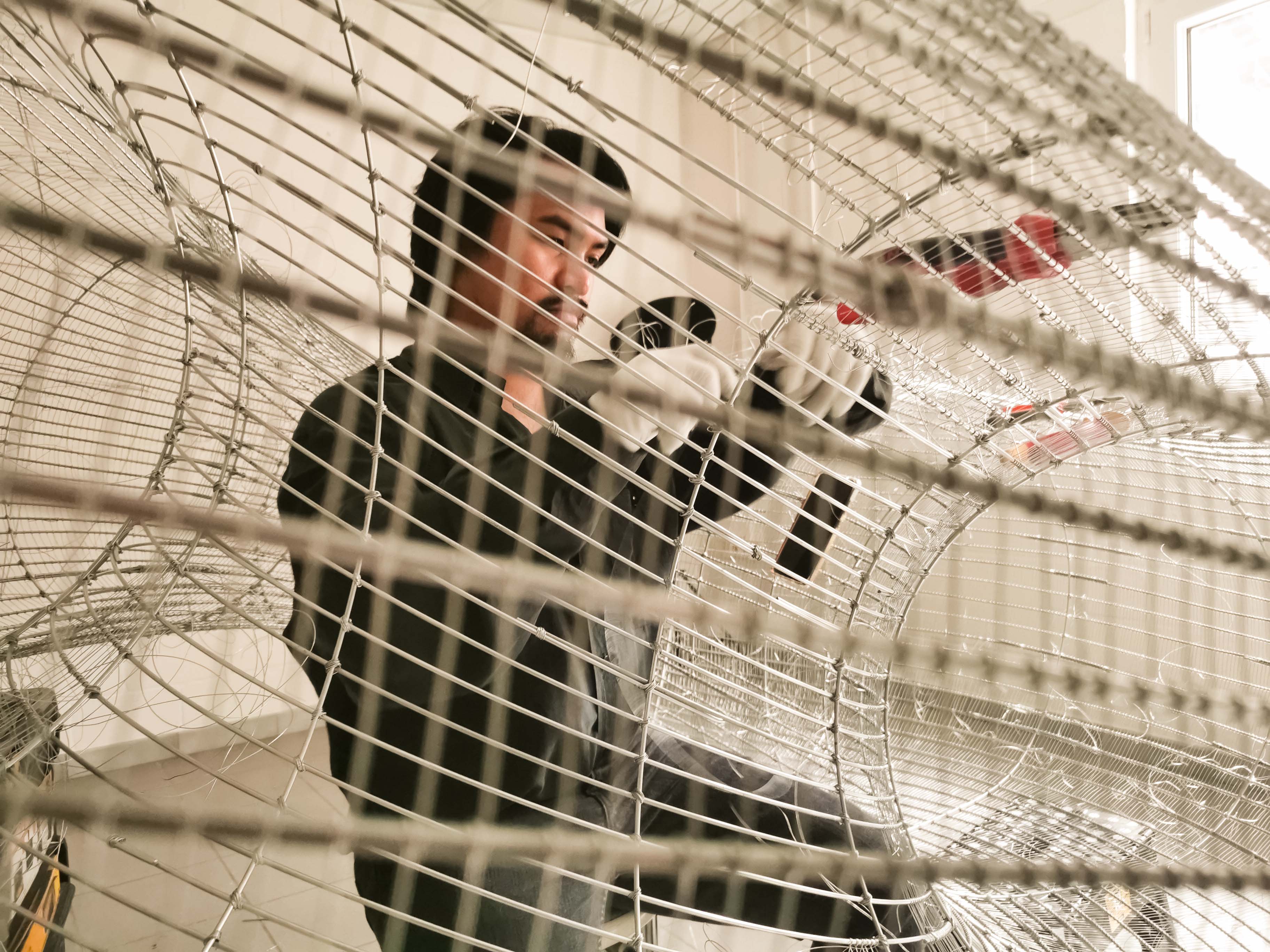
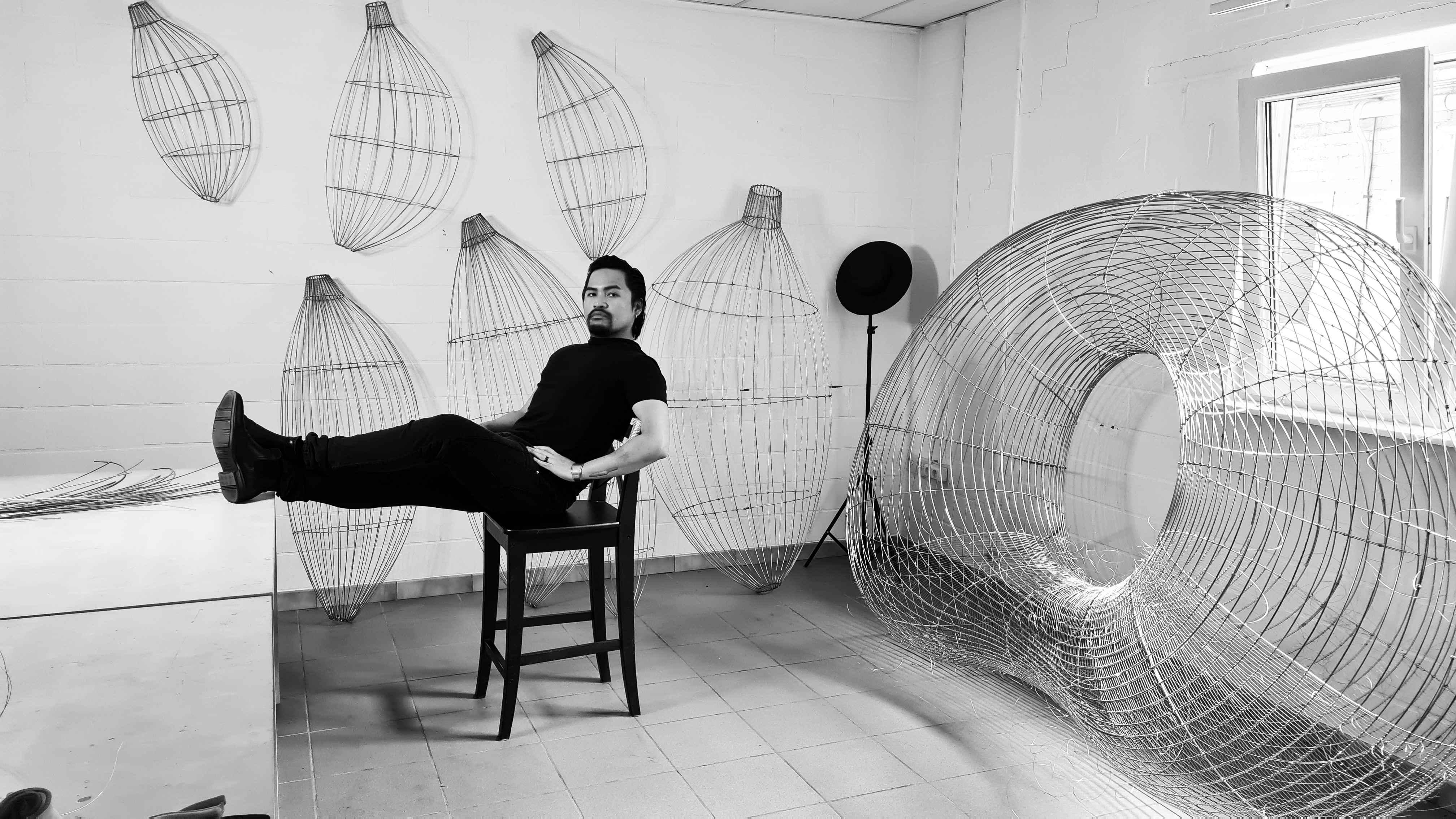
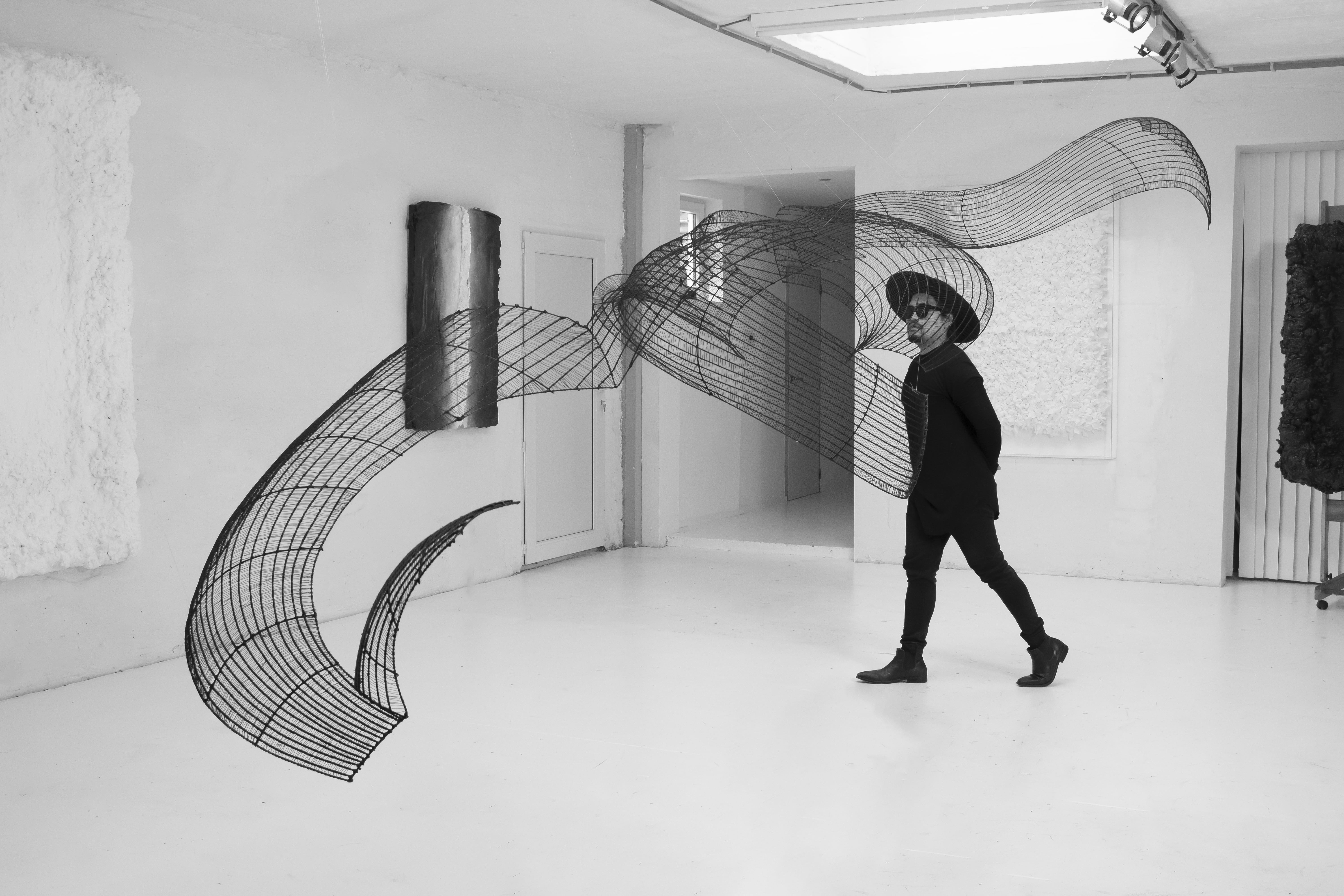
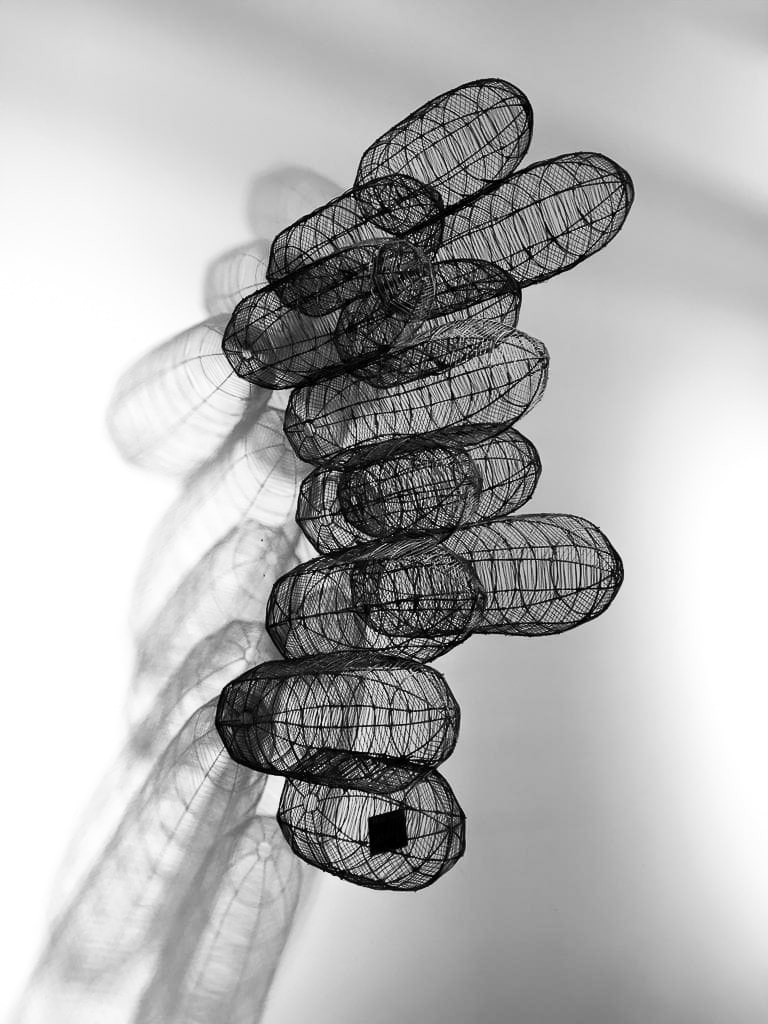


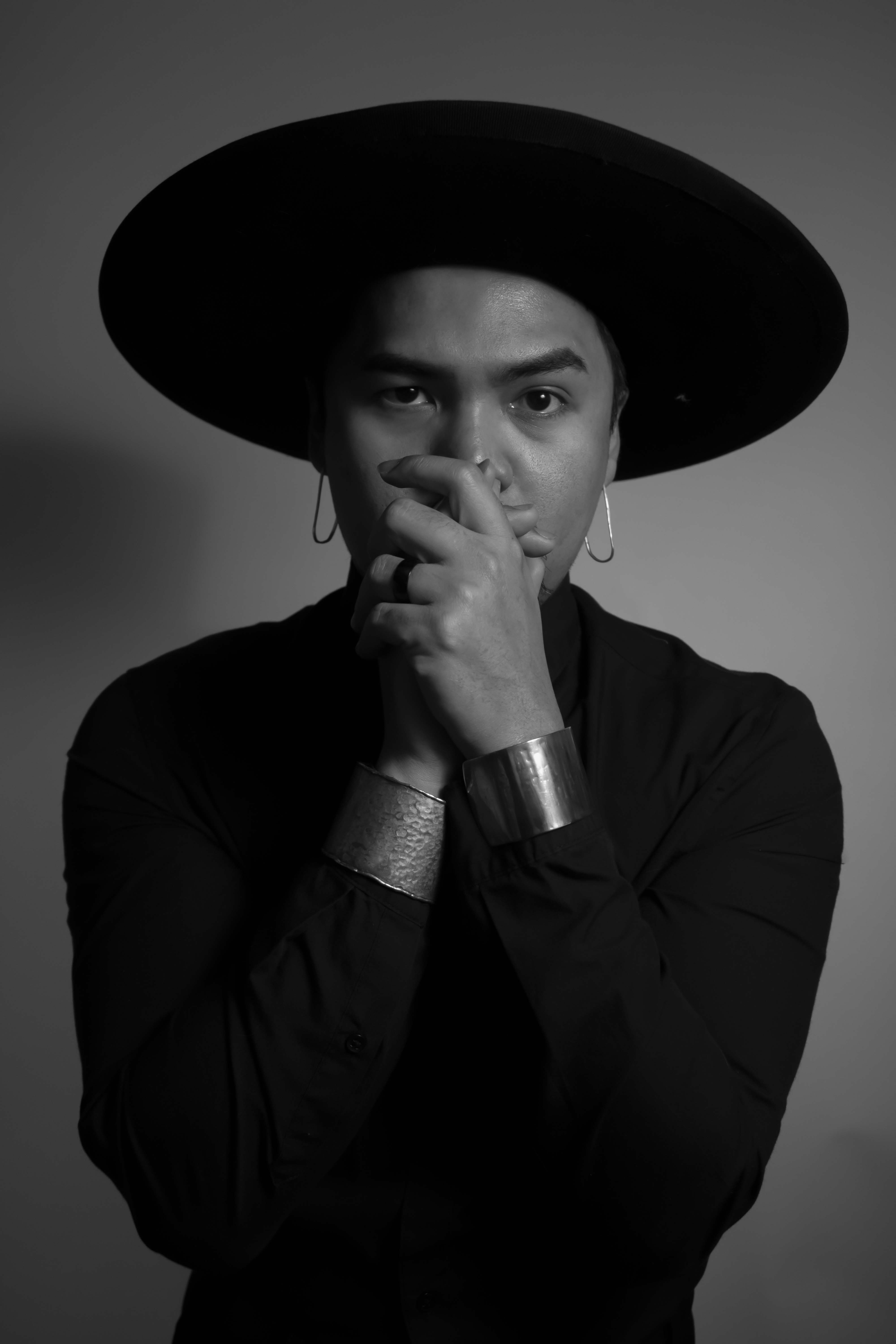
Racso Jugarap weaves metals and wires to create stunning artwork favored by collectors from around the world. Among his notable clients are Galila Berzalai Hollander, a prominent Belgian socialite with a reputable discernment and taste for the arts.
Racso never dreamed of becoming a renowned artist, but now, his works occupy prominent spaces in galleries and exhibits in cities like Brussels, Antwerp, Hamburg, Berlin, Amsterdam, Paris, New York, and London.
Post a Comment
“I was born and raised in General Santos in Mindanao, so I am really probinsyano,” Racso tells Esquire Philippines. “I never had a formal schooling in the arts, to be honest.”
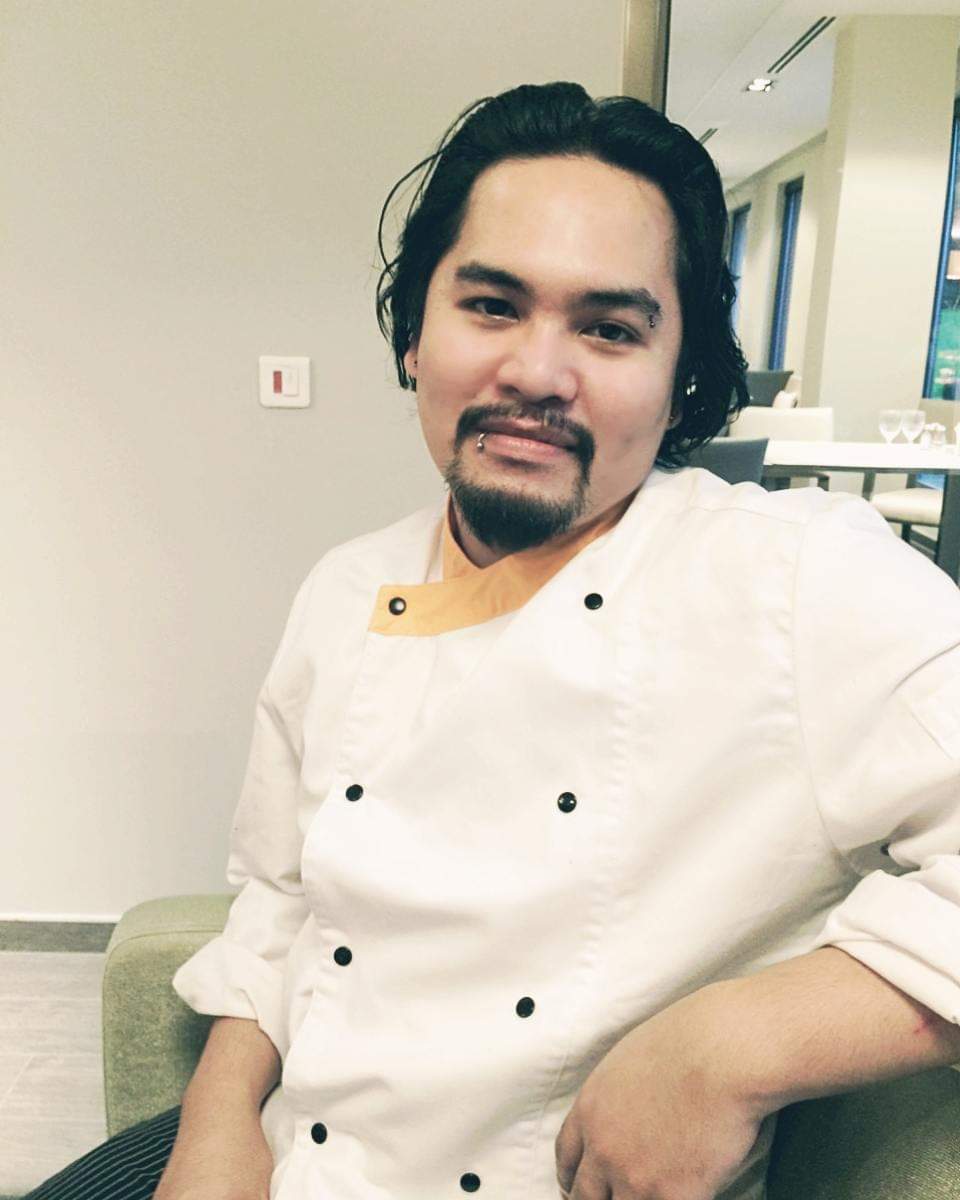
Racso graduated in 2009 with a degree in Culinary Arts, and was scouted in 2011 by a German company to work for them as a chef. “I worked for them for five years, until I transferred to a Belgian company in 2016. Since then, I’ve been based in Brussels.”
He is the youngest son of a jewelry designer in the Philippines. His family runs a jewelry business in General Santos City. His dad is a jewelry designer and his mom runs the business. It was his exposure to his father’s workshop that implanted a creative seed in Racso.
ADVERTISEMENT - CONTINUE READING BELOW
Post a Comment
“When I was little, I grew up watching my dad crafting things with his hands. From raw gold material to jewelry. His studio has been my playground. With his tools, I would create toys as gifts for my friends, and I guess that’s how I started working with my hands.”
Many years later, Racso would forget about his experiences in his father’s workshop. He was focused on his job as an OFW chef.
Racso as a Chef
CONTINUE READING BELOW
watch now
But an incident at a hardware store brought him back to his playful days as a child in his father’s atelier.
“While working as a chef for a Belgian company in 2016, I found myself in a hardware store because I wanted to buy gardening tools.
“There, I saw an aisle filled with wires—mga alambre—and an image flashed in my mind taking me back to my childhood days. These are materials I used to play with and craft toys for my friends. I grabbed it and took it home, and started playing with it.”
When Racso would finish his nine-to-five job, he would create figures out of the wires he bought and would post them on Instagram.
Post a Comment
“I was new to Instagram at that time, I just posted my creations there. And then someone from New York sent me a message, asking if the alambre artwork I made were for sale.”
ADVERTISEMENT - CONTINUE READING BELOW
Unsure of what to say, Racso reluctantly answered “yes.”
“It was really just for fun! I wasn’t planning on selling it, but I was really happy that someone wants to buy what I really love to do. That buyer from New York is my very first art collector patron.”
That first buyer opened many doors for Racso. The buyer introduced him to galleries in New York, Connecticut, and Los Angeles. During this time, Racso was still working as a chef.
“As a chef, my routine was so regular. I start from mise en place, and end the day with it, that has been my routine for years and years and years. It got so boring.
“With this new venture, I realized there’s another world for me. After a month of shipping my sculptures to the U.S., galleries in Belgium began taking notice of me and started asking if they could also have my pieces.
A Belgian lady asked Racso to visit her, and he did.
Racso thought she was going to buy one piece of artwork, but it turned out that she was a major collector, promoter, and patron of the arts in Europe and in the U.S. She ordered hundreds of Racso’s designs.
“I wasn’t expecting that. I didn’t have a studio, I was just creating them in my apartment. I didn’t even have staff, I was the only one doing them on my own.
ADVERTISEMENT - CONTINUE READING BELOW
To cope with the huge orders, Racso asked his Filipino friends to help him with the logistics and packaging.
That Belgian lady was the one who opened up everything for Racso. She hired PR agencies for him that put him in magazines, radio, and television shows in Belgium. Racso toured Europe, mounting exhibits from Brussels to Paris, carving a name for himself outside the culinary world.
“I never expected something like this was going to be possible for someone like me. Having different projects, shows, expositions,” Racso says.
During all that time he was participating in expositions and shows, Raso still held onto his regular job as a chef at a Belgian restaurant. But something happened that pushed him to leave that job.
ADVERTISEMENT - CONTINUE READING BELOW
Post a Comment
Racism Pushed Racso to Leave the Kitchen
“In the Philippines, we were taught that in the kitchen, teamwork is essential. That has really been my training. Even when I worked in Germany as a chef, teamwork was a culture in the kitchen. But during my work in this Belgian restaurant, they changed the management, and I experienced racism.
The restaurant split the kitchen staff into teams of Belgians and those from other nationalities.
“The other nationalities were kind of given a hard time,” Racso said.
That racism motivated Racso to leave his first love of the culinary world and pursue an independent path toward becoming a full-time artist.
At the time that racism was happening, Racso was already earning three times as much as his regular job from his sideline. That made it an easier decision to leave the kitchen and pursue the arts.
“The pressure was there. During those months when I was working in the kitchen, I was so down and I felt like it was something I do not want to do anymore. I got frustrated and I just had to do something.”
Racso said goodbye to discrimination and became his own boss.
“They are celebrating me in the art world, but in the kitchen, I was treated like… you know.”
He did not elaborate but there was vindication in his voice.
He would describe the irony of slaving in the kitchen for eight hours a day, then feeling like a celebrity after work when he comes to galleries and exhibits where his works are displayed and fought over by collectors.
But when he became too successful, he started to feel the pressure of hundreds of orders from his clients. At first, he refused to hire staff who would execute his designs.
Post a Comment
Post a Comment
“That was my first thought when I was new, I would say, “But if I let others create this for me, that wouldn’t be my artwork anymore!” Racso laughs about it whenever he remembers it.
ADVERTISEMENT - CONTINUE READING BELOW
When a design is reproduced 300 to 400 times, Racso says things get boring for him, describing it as “routine.” So he made unique pieces that will never be replicated.
“It was a huge hit,” says Racso.
Galleries in Europe noticed his unique creations and started bidding on the pieces. The unique pieces sell for even higher prices than his reproduced pieces.
Now, Racso has his own office and atelier in Brussels, and his calendar is filled with exhibits until the end of the year.
As of this writing, Racso has an ongoing exhibit in Paris. He mounted another exhibit on September 24 in Antwerp that would run until December 24.
ADVERTISEMENT - CONTINUE READING BELOW
His pieces are meditations on the simpler, innocent life he had as a child. Some of his works are inspired by ordinary things he finds nostalgic: A piece of saging na saba. A balete tree from his neighborhood.
“Foreigners would never understand what saba means to Filipinos. For them, it’s just banana. For us, it means something more: merienda, turon, nilaga, and many other things.”
Today, Racso has come far from the OFW chef he once used to be. He is now a sought-after artist in Europe, whose unique creations fetch for thousands of dollars.
He has been hired to create pieces for the famous music festival, Tomorrowland. He has been commissioned to create monumental installations. His works can be found publicly in several establishments.
But despite all of the accolades, Racso believes it’s not his works that define his success.
“The biggest creation that I’m really happy about is myself. I transformed myself into something, like personality development. I never thought I could get to where I am now, that this is possible. It was hard at some point, but I noticed that whenever I pushed myself harder and struggled against my doubts, there’s always something that comes after,” Racso says. “It’s not about the works, but art creating something different in you.”
We use cookies to ensure you get the best experience on Esquiremag.ph. By continued use, you agree to our privacy policy and accept our use of such cookies. Find out more here.